resources
BLOG
Consulting Advice

Rebranding the company - a fight with the Patent and Trademark Office


Marketing
Communications
The Consulting Balance
Go deeper
Download our professional services ‘cheat sheet’ now

“Your Nov 2014 application to trademark ‘Nexient’ has been rejected because another company’s Dec 2014 application came first.”

We had already launched our new company name when we received this confusing notice from the US Patent and Trademark Office. We had spent over $100k on a new URL, a website redesign, and changing out all of the random things you have to change like signs and business cards.

Before I dive into what we did next, I’ll give some context:

In my first interview to come aboard as the new CEO of what was then Systems in Motion, I was asked what I thought of the company’s name. It seemed a weird question, but I gave a quick answer and moved on. When the second and third interviewers also asked me this question, I realized I was walking into a potential company rebranding debate.

I didn't actually think it was a great name. It was too long so everyone would shorten it to “SIM.” There were already at least a couple of other organizations known by that name in our space, so I felt we should change. We also used SaaS software for everything we did and I didn’t want to type out my lengthy email [email protected] as my username every time. I decided that while it’s painful to change names, it would be best to do it quickly and then get down to the changes I would make to scale the firm.

Four of the startups I’d previously worked at went through a rebranding process, so I had seen multiple approaches to finding a new name. In one case, we spent over $100k on a naming company. In another, we went through a long internal process of brainstorming and vetting names before we had a last-minute suggestion from an employee’s spouse that won everyone over (we had to buy that URL from a porn site, but it was a great name for the company).

When our CMO suggested that we could use a new website, BrandBucket to buy both a name and the URL, I was interested. After a few sessions, we kept coming back to the name Nexient, which was for sale with URL for $5k. When we tested it, everyone either liked it or was neutral. I was surprised nobody hated it (usually people do). So we grabbed it and worked with an agency to redesign our website and launched it with an event at a conference with analysts and clients in attendance.

A week later, we got the crazy letter from the US Patent and Trademark Office. We had debated internally whether to file for the trademark at all. We decided we should and filed at the end of November. We didn’t realize it, but a Fortune 500 company had also landed on this same name for a whole new line of products and submitted their application a week later in early December.

I called our lawyer and asked how we address the issue with the Patent and Trademark Office, thinking that this obvious mistake would be easy to fix. Our lawyer said that I had thought wrong. There wasn’t a formal process to complain other than a 30-day window to dispute the other company’s application. To do so, we’d need to go through a process similar to a lawsuit and expect to spend more than $100k on discovery and depositions. We didn’t have $100k to spend, so I asked if there was anything else we could do.

The lawyer mentioned that for $500, we could automatically extend the 30-day window for public comment by a further 90 days. Figuring that at a minimum, this would buy us some time and get the other company’s attention, I decided it was worth a try. So on day 30, we filed the form, extending their window another 90 days. They wouldn’t know for sure if they had the trademark until the window had closed.

A day or two later I got a call from the other company’s lawyer. They asked me to give up on the name and in exchange, they would pay us $5k. Having already launched publicly, this was a non-starter and I told him as much. Things then went very quiet. An agonizing month later we received a notice that the other application for the trademark had been withdrawn and we were awarded it based on our second-place application. It turned out the company had a product launch scheduled and the additional 90-day window went beyond their launch date.

It was a wild ride, but with some luck and very little cost, it ended well for us.

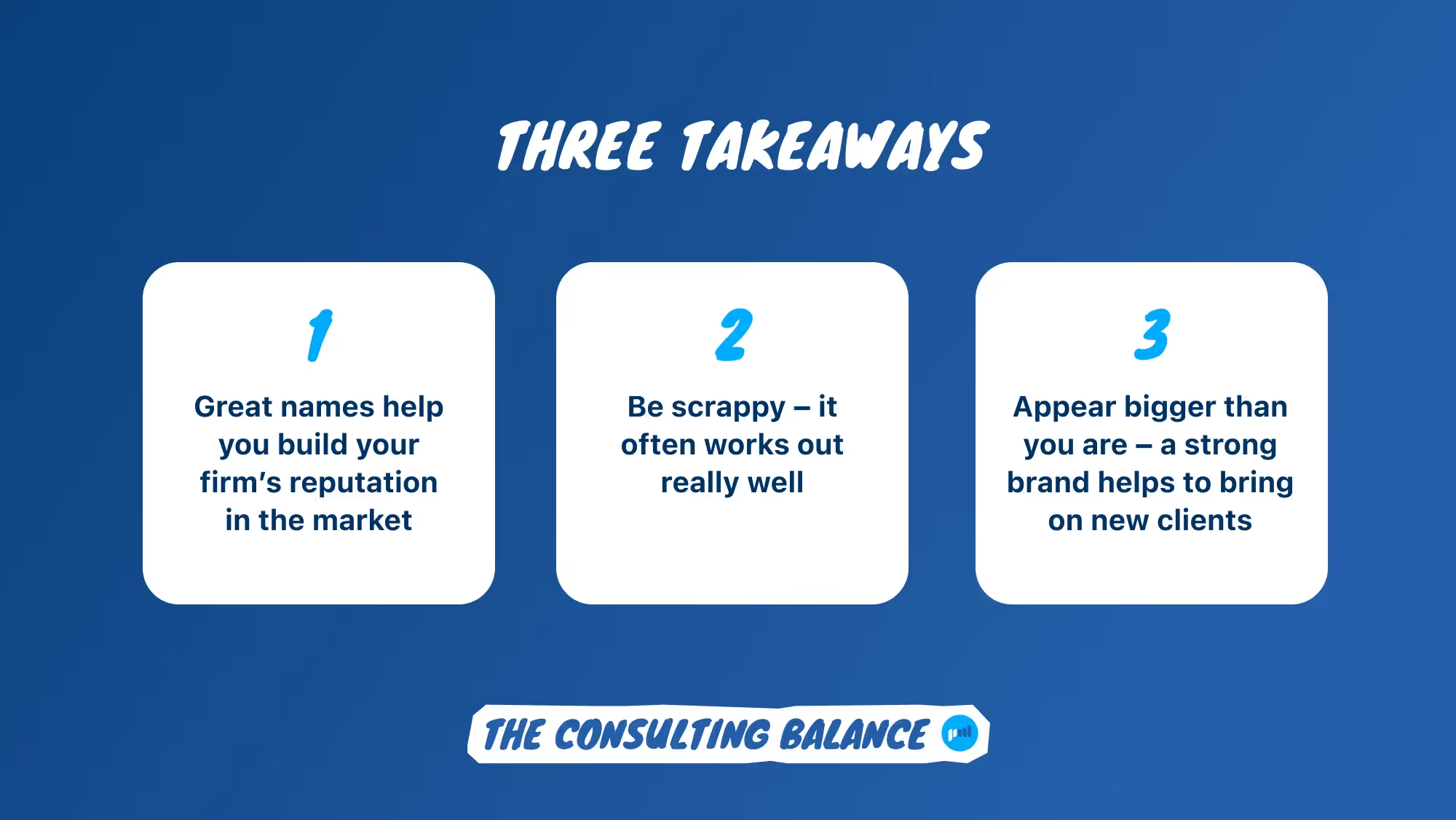
There are a number of takeaways from this whole process:

  • Great names are valuable - as you are looking to build your firm’s reputation in the market, having a short, memorable name (and the URL to go with it) is really important.
    We had another lucky side note: people always said that they had heard of Nexient when I was fairly sure they couldn’t have. I think that they were associating it with a heavily advertised medicine for heartburn called “Nexium” and it made our name seem familiar.
  • Be scrappy - it often seems like you need to spend a lot of time or money to get to a great result. Having been through this before, I thought that might be the case here. Thankfully my CMO suggested this scrappy process which seemed like a good solution. Luckily, it worked out really well.
  • Appear bigger than you are - a strong brand identity really helps propel a small firm to acquire new clients. One of the key foundation pieces of the brands image is creating a strong name. As we looked to grow Nexient from a few hundred people to over a thousand, I’m convinced that our rebrand was key to speeding us up along the way.

A few final thoughts

People have asked me what makes a great name. I’m not an expert, but I’ve worked with enough wordsmiths to have learned a few rules:

  • Keep it short. The shorter, the better for a name. If it’s too long, people will shorten it to a nickname or an acronym;
  • Starting and ending with a consonant makes a stronger name;
  • Ending with an A makes it softer. Depending on your product or service, you may want a stronger or softer name;
  • Having an X in the name gives you bonus points for some reason.
Share:
learn more

Download our professional services ‘cheat sheet’.

Whether you’re at $5M, $15M, or $50M, this cheat sheet maps the moves that separate firms who stall from firms who scale.

UP next:
By subscribing you agree with our Privacy Policy.
Thank you! Your submission has been received!
Oops! Something went wrong while submitting the form.
Keep reading

Read similar resources from Projectworks

Building Provoke: From 0-150 Staff
resource type

In a recent Projectworks Podcast episode, Doug Taylor (who co-founded Provoke and scaled it to 150 staff) sat down with Mark Orttung (who took Nexient from $30m to $130m). Together, they co-wrote The $50 Million Consulting Firm, and in this episode they shared a collection of lessons they wish they'd had earlier when scaling their software consulting firms.

Jacob Lawrie
April 20, 2026
resource type
resource type

Novigi has an impressive story. Since launching in 2016, they’ve scaled to 550 staff across six offices and two countries, while becoming the fastest-growing professional services firm on the AFR Fast 100 - their story is worth studying.

Bernadette Keating
April 9, 2026
resource type
resource type

”When new work comes in, we have the right people, ready to go. Winning work and protecting the team, we never have to choose just one.” How often can you confidently say the same? Facing resourcing questions about upcoming projects can sound simple, but if your schedules are built on assumptions and capacity is only estimated, face it, your resource planning is under-engineered!

Bernadette Keating
April 12, 2026
resource type
Consulting Advice
Marketing
,
The Consulting Balance

Rebranding the company - a fight with the Patent and Trademark Office

By
Mark Orttung
Rebranding the company - a fight with the Patent and Trademark Office

When an internal debate about a company name triggered a legal situation.

“Your Nov 2014 application to trademark ‘Nexient’ has been rejected because another company’s Dec 2014 application came first.”

We had already launched our new company name when we received this confusing notice from the US Patent and Trademark Office. We had spent over $100k on a new URL, a website redesign, and changing out all of the random things you have to change like signs and business cards.

Before I dive into what we did next, I’ll give some context:

In my first interview to come aboard as the new CEO of what was then Systems in Motion, I was asked what I thought of the company’s name. It seemed a weird question, but I gave a quick answer and moved on. When the second and third interviewers also asked me this question, I realized I was walking into a potential company rebranding debate.
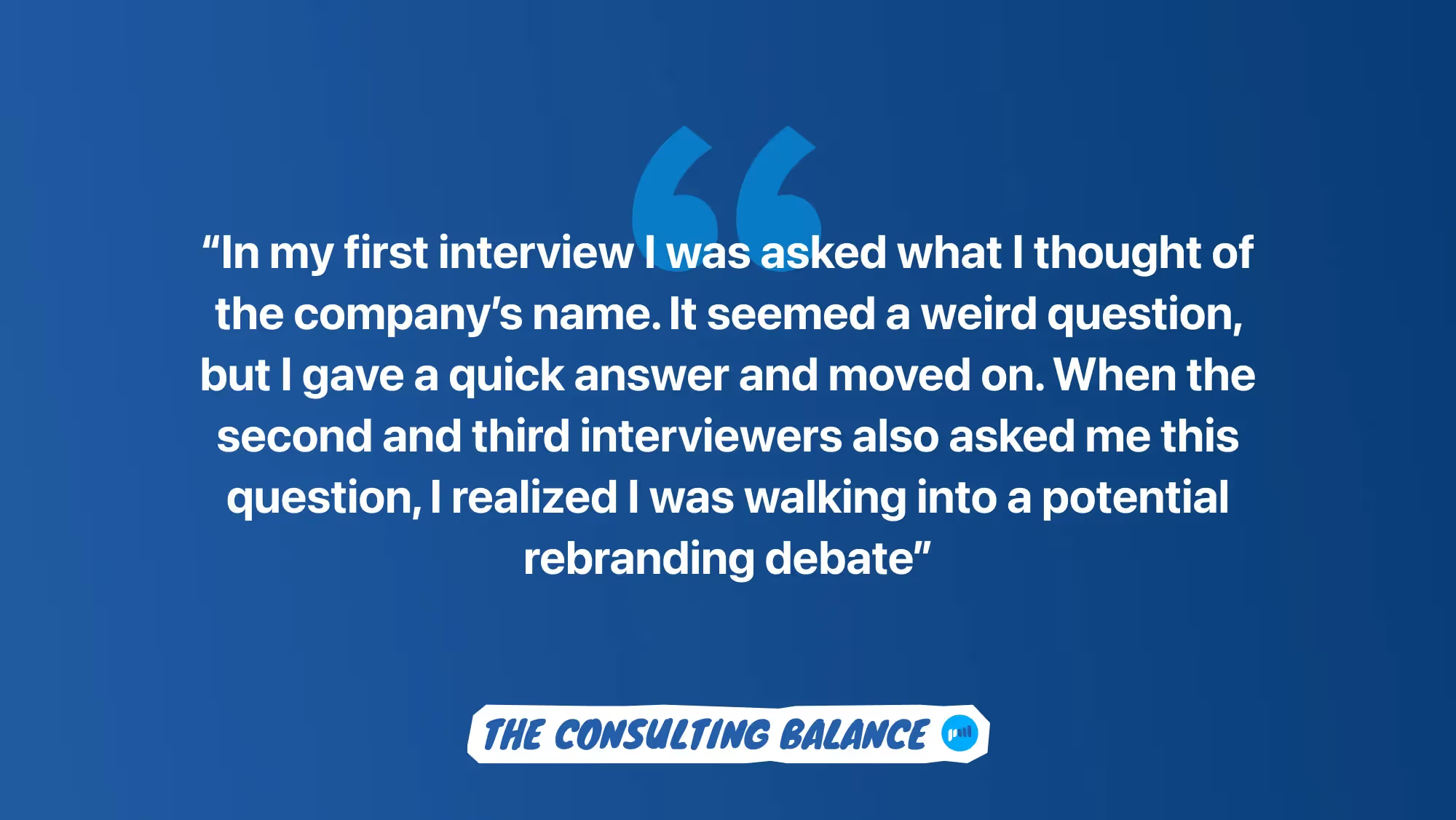
I didn't actually think it was a great name. It was too long so everyone would shorten it to “SIM.” There were already at least a couple of other organizations known by that name in our space, so I felt we should change. We also used SaaS software for everything we did and I didn’t want to type out my lengthy email [email protected] as my username every time. I decided that while it’s painful to change names, it would be best to do it quickly and then get down to the changes I would make to scale the firm.

Four of the startups I’d previously worked at went through a rebranding process, so I had seen multiple approaches to finding a new name. In one case, we spent over $100k on a naming company. In another, we went through a long internal process of brainstorming and vetting names before we had a last-minute suggestion from an employee’s spouse that won everyone over (we had to buy that URL from a porn site, but it was a great name for the company).

When our CMO suggested that we could use a new website, BrandBucket to buy both a name and the URL, I was interested. After a few sessions, we kept coming back to the name Nexient, which was for sale with URL for $5k. When we tested it, everyone either liked it or was neutral. I was surprised nobody hated it (usually people do). So we grabbed it and worked with an agency to redesign our website and launched it with an event at a conference with analysts and clients in attendance.

A week later, we got the crazy letter from the US Patent and Trademark Office. We had debated internally whether to file for the trademark at all. We decided we should and filed at the end of November. We didn’t realize it, but a Fortune 500 company had also landed on this same name for a whole new line of products and submitted their application a week later in early December.
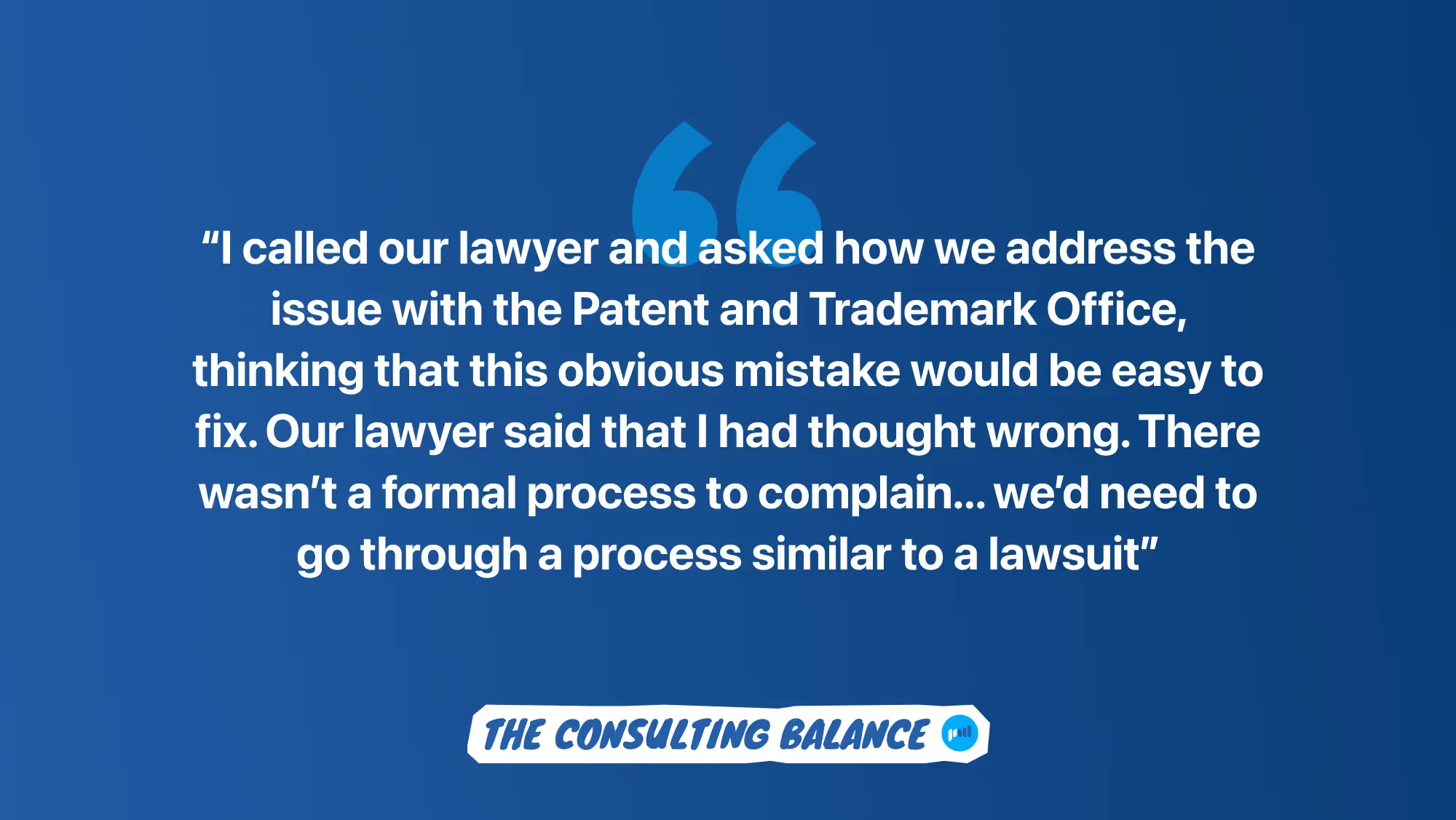
I called our lawyer and asked how we address the issue with the Patent and Trademark Office, thinking that this obvious mistake would be easy to fix. Our lawyer said that I had thought wrong. There wasn’t a formal process to complain other than a 30-day window to dispute the other company’s application. To do so, we’d need to go through a process similar to a lawsuit and expect to spend more than $100k on discovery and depositions. We didn’t have $100k to spend, so I asked if there was anything else we could do.

The lawyer mentioned that for $500, we could automatically extend the 30-day window for public comment by a further 90 days. Figuring that at a minimum, this would buy us some time and get the other company’s attention, I decided it was worth a try. So on day 30, we filed the form, extending their window another 90 days. They wouldn’t know for sure if they had the trademark until the window had closed.

A day or two later I got a call from the other company’s lawyer. They asked me to give up on the name and in exchange, they would pay us $5k. Having already launched publicly, this was a non-starter and I told him as much. Things then went very quiet. An agonizing month later we received a notice that the other application for the trademark had been withdrawn and we were awarded it based on our second-place application. It turned out the company had a product launch scheduled and the additional 90-day window went beyond their launch date.

It was a wild ride, but with some luck and very little cost, it ended well for us.

There are a number of takeaways from this whole process:

  • Great names are valuable - as you are looking to build your firm’s reputation in the market, having a short, memorable name (and the URL to go with it) is really important.
    We had another lucky side note: people always said that they had heard of Nexient when I was fairly sure they couldn’t have. I think that they were associating it with a heavily advertised medicine for heartburn called “Nexium” and it made our name seem familiar.
  • Be scrappy - it often seems like you need to spend a lot of time or money to get to a great result. Having been through this before, I thought that might be the case here. Thankfully my CMO suggested this scrappy process which seemed like a good solution. Luckily, it worked out really well.
  • Appear bigger than you are - a strong brand identity really helps propel a small firm to acquire new clients. One of the key foundation pieces of the brands image is creating a strong name. As we looked to grow Nexient from a few hundred people to over a thousand, I’m convinced that our rebrand was key to speeding us up along the way.
A few final thoughts

People have asked me what makes a great name. I’m not an expert, but I’ve worked with enough wordsmiths to have learned a few rules:

  • Keep it short. The shorter, the better for a name. If it’s too long, people will shorten it to a nickname or an acronym;
  • Starting and ending with a consonant makes a stronger name;
  • Ending with an A makes it softer. Depending on your product or service, you may want a stronger or softer name;
  • Having an X in the name gives you bonus points for some reason.
Join our professional services community

Subscribe for the latest updates delivered straight to your inbox.

By subscribing you agree with our Privacy Policy.
Enjoying this article?
Share it with the world!

Related Articles

5 Lessons on Scaling a Consulting Firm, from the Founder of Provoke
Consulting Advice
Z Suite
,
Growth

5 Lessons on Scaling a Consulting Firm, from the Founder of Provoke

In a recent Projectworks Podcast episode, Doug Taylor (who co-founded Provoke and scaled it to 150 staff) sat down with Mark Orttung (who took Nexient from $30m to $130m). Together, they co-wrote The $50 Million Consulting Firm, and in this episode they shared a collection of lessons they wish they'd had earlier when scaling their software consulting firms.

Turning an Operational Discipline Into a Growth Engine
Consulting Advice
Z Suite

Turning an Operational Discipline Into a Growth Engine

Novigi has an impressive story. Since launching in 2016, they’ve scaled to 550 staff across six offices and two countries, while becoming the fastest-growing professional services firm on the AFR Fast 100 - their story is worth studying.

Double Your Revenue Growth With Effective Resource Planning
Resource Management
Revenue
,
Growth

Double Your Revenue Growth With Effective Resource Planning

Your sales pipeline and marketing funnel are important as a source of leads and revenue, but the real driver of growth for your consulting firm may be from an unexpected source: effective resource planning. Building an efficient lead-to-close system will drive revenue, but if you can’t deliver the work efficiently and profitably, your firm isn’t actually growing; it’s just getting more busy.